

hots springs, saw mills, and ghost towns
In the north Baker Valley, you’ll spy two close-by towns with interesting names: Medical Springs and Pondosa. Yes – Pond-osa, not Pond-er-osa. Both places are officially ghost towns. You’ll still find families living there, and the occasionally-open Pondosa Store, but other town services like the post office have long gone since the local sawmill closed in the late 50s.
Medical Springs got its name from hot springs that attracted bathers and health seekers around the turn of the 20th century. By 1929 visitors could bathe in an olympic-size swimming pool filled with 104-degree water pumped from the springs. The springs and hotel closed in the late 50s as well, after the sawmill in Pondosa burned down and traffic to the area dwindled. You can still view the pool from the road, but be aware it’s on private property and not open to visitors.
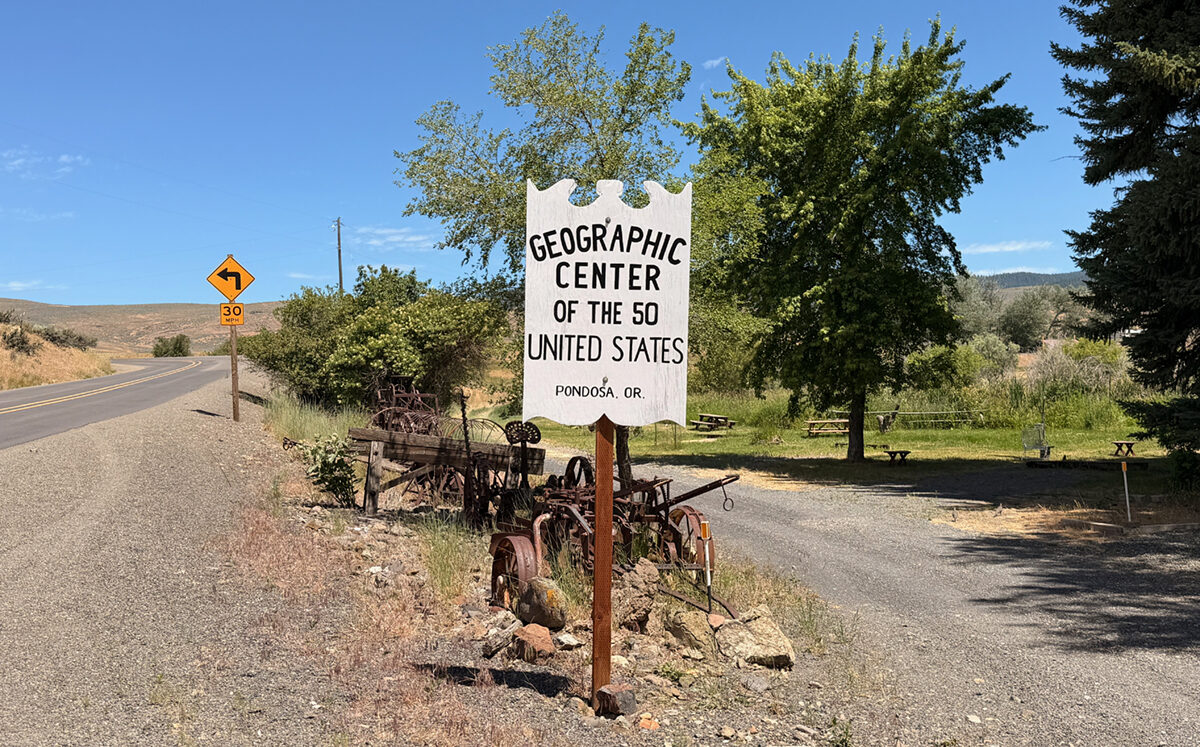
The geographic center of the u.s.?
In Pondosa, a curious signpost claims to be the “geographic center of the 50 United States.” Yes, that includes Alaska and Hawaii, which is why we’re not in Kansas anymore (which still boasts the center of the continental U.S.). Is this spot actually the geographic center? The short answer is no, and the complicated answer depends on who you ask. In 1959, Research Publications, Inc. based in the Bay Area of California calculated the geographic center, and waffled back and forth between a spot near McCall, Idaho and one near Pondosa. Eventually the staked their claim that the center was near Pondosa, about 11 miles northeast, properly in the foothills of the Wallowa Mountains.
Where is the real center?
The news spurred locals to erect the sign marking Pondosa as geographically significant at a time when the town itself was dying away. Unfortunately, Pondosa can’t actually back up this claim. In fact, it’s one of at least eight different communities or locations across America that have at one time or another claimed to be the center. The most reliable claim seems to be Belle Fourche, South Dakota. In 1959 the U.S. Coast and Geodetic Survey (which later became part of NOAA) determined the geographic center was located about 20 miles north of the small town near the Wyoming/Montana border. The town erected a park close to the actual site, but as highway traffic shifted away from the area, Belle Fourche decided to create a monument to the geographic center within the city limits. Even though it may be the most accurate, this official monument still sits some 20 miles away from the actual center point.
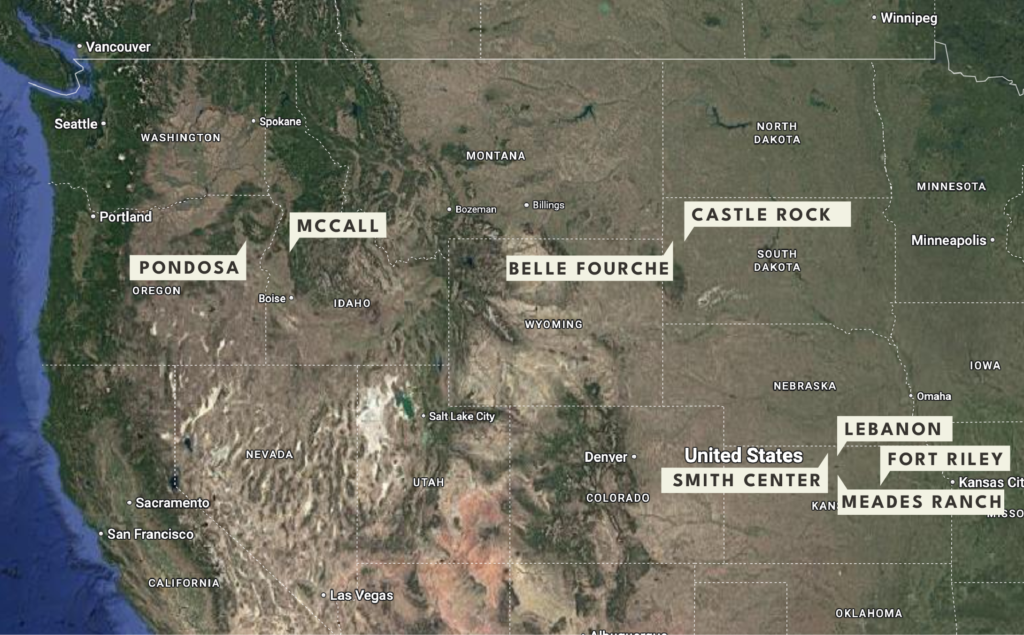
Which makes Pondosa’s claim to be the center a little more understandable, admirable, and acceptable (perhaps). The whole history goes to show how arbitrary and meaningless such designations are, even though they hold outsized sway in our imagination. Don’t we all want to be the center of something? Well, in Pondosa, you can. Maybe.